
Rwanda: Homeland Security survivors and 'perpetrators of genocide'
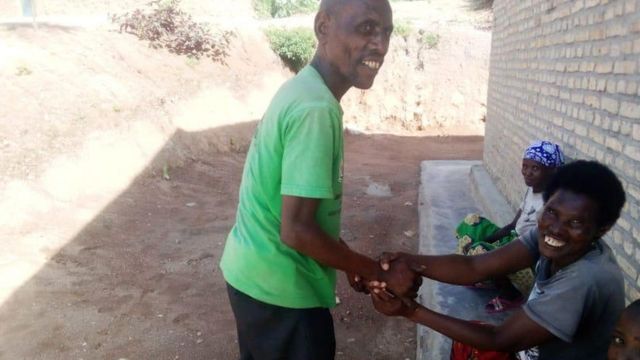
Munyanziza and Mukagahima greet each other outside their mules
Claudine Mukagahima and Faustin Munyanziza live in the same house built by the 'Commission for Unity and Reconciliation', a special house where two families live; one of the perpetrators of the genocide in Rwanda in 1994 with his neighbor being the survivor of the genocide.
Neighbor Boniface Nyabyenda says "he did not know this was possible."
Mukagahima, a genocide survivor and her two children, while living, face their door to that of Munyanziza, who has been in prison for 9 years for genocide and was later released.
They live in Nyamiyaga village in Nyanza area in houses known as 'Two in One' built by the government for the poor.
More than 800,000 Tutsis and Hutu were killed in the genocide, but what remains a major challenge after the war is the animosity between the perpetrators and the survivors from the two major ethnic groups.
Mukagahima, 48, says he went through a religious healing process on the basis of unity and reconciliation where they were taught to forgive if one of the religious projects linked to the government was to sensitize Rwandans on the importance of reconciliation and forgiveness.
The government says in its pardon program it has reached 92 percent as well as 'I am a Rwandan citizen' which aims to ensure that citizens have returned to normalcy whose success rate has reached 91 percent according to a report released in 2020.
Some NGO activists, however, argue that the percentage is not a reality and that the government is doing everything in its power to ensure that discrimination and reconciliation are no longer a major problem in the country.
"Before, I was looking at them in horror, I never thought about how I could live with a killer," the survivor said.
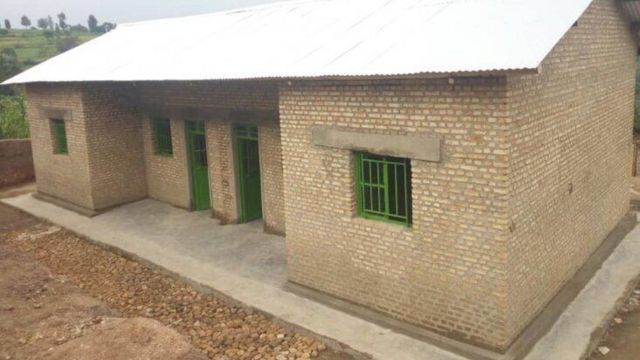
They live in Nyamiyaga village in Nyanza area in houses known as 'Two in One'
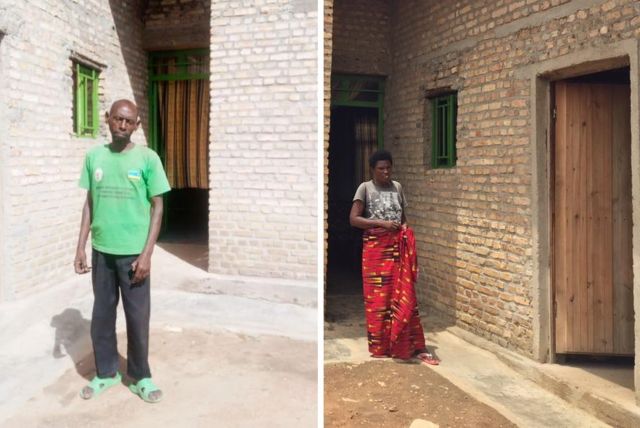
Boniface Nyabyenda says "he did not know this was possible."
Did anyone force him to forgive?
Munyanziza, 62, after being in prison for 9 years and doing important work for the community for more than 5 years, says he initially could not believe his eyes if he could live with a survivor.
"By the time I got scared, I was wondering, 'Will I be able to live with that person?' I used to say to myself that for the first time I was living with the survivors of the massacre, I was also wondering, 'Will it ever come when they kidnap me, but that never happened.
Mukagahima says that in the three months they have been living in the house, they have co-operated and lived well without any problems.
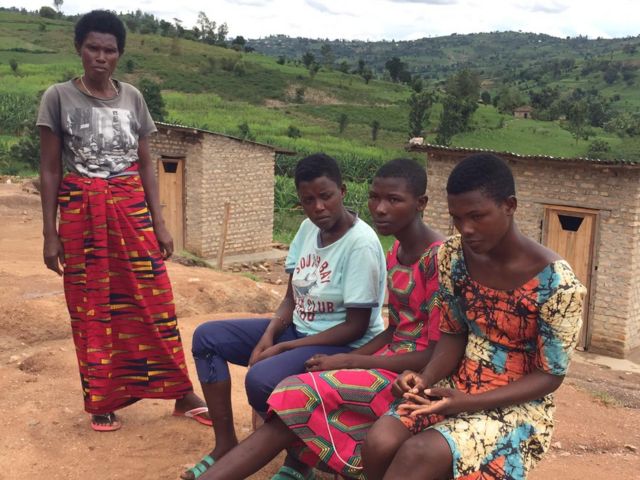
Mukagahima lives with her two children and another from her family
"One day I told him, 'Let's go listen to the radio and talk about history,'" he says.
Boniface Nyabyenda, a neighbor who spoke to the BBC, said he had seen them living well with his neighbor but did not know if that was possible.
"Saying that the person who killed us lives here? I myself was shocked. I didn't think it was possible.
Post a Comment